
Saunders Center for Orthopedics and Physical Performance at University of Rochester Medical Center (URMC)
with SLAM Collaboration & Perkins&Will

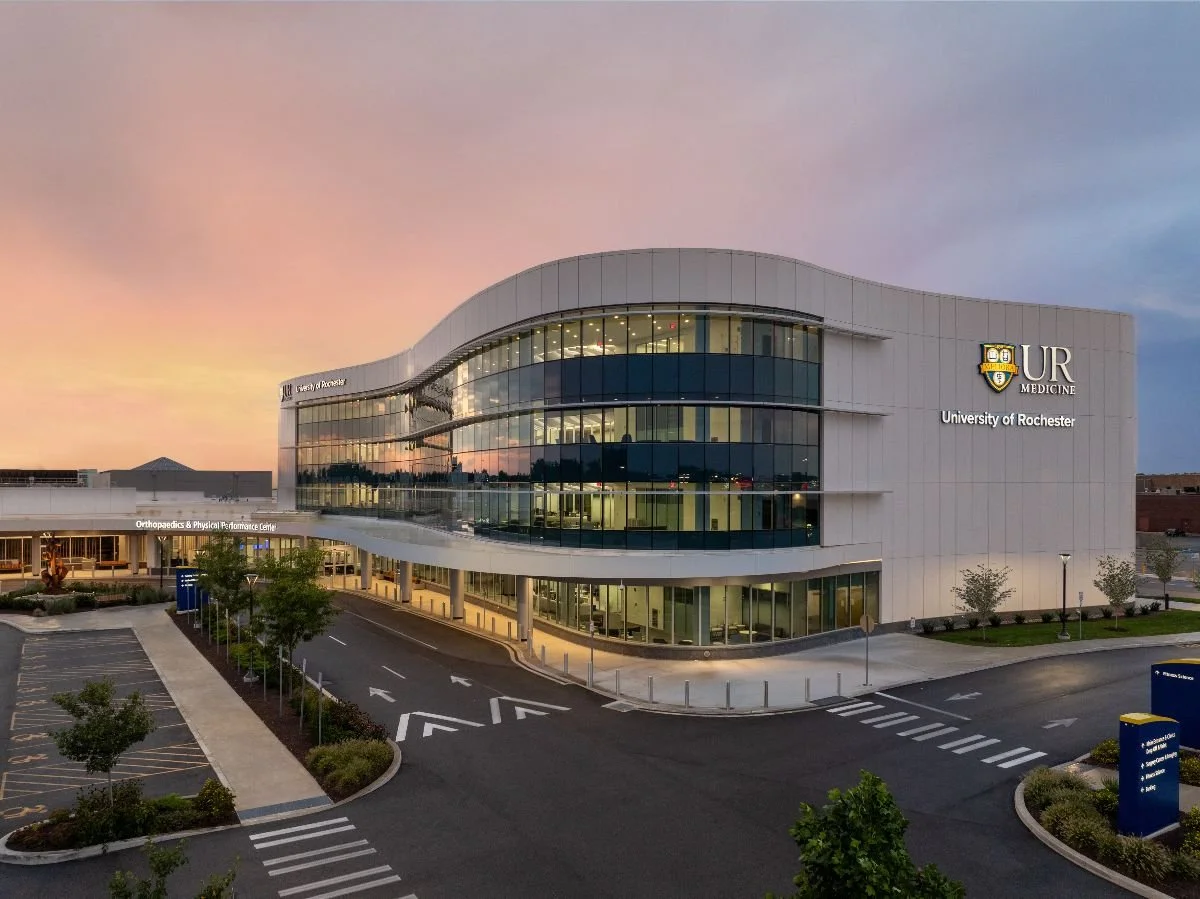
Photo Credit: ©Halkin Mason Photography
Interiors in Motion:
Architect of record, The S/L/A/M Collaborative (SLAM), along with project partner and design architect, Perkins&Will, have joined forces in renovating the Saunders Center for Orthopedics and Physical Performance at URMC.
The Saunders Center is the transformation of an abandoned retail shell into a living anatomy of light and motion – where design becomes a partner in recovery and stands as a place of renewal. "Repurposing a traditional community anchor, such as a mall, helps upend perceptions of healthcare as a centralized urban complex," says Robert Goodwin, FAIA, design principal for the project based in Perkins&Will's New York studio. "We are integrating healthcare into the existing fabric of the community rather than asking patients to travel to a facility that might be hard to reach or seem intimidating in scale or layout." In Rochester, New York, where winter days are short and daylight scarce, every window, reflection, and surface of the Center has been shaped to capture and extend the sun’s reach. Daylight now falls with rhythm, guiding the body’s return to balance. Materials feel grounded yet buoyant, evoking both the athlete’s precision and the patient’s courage. With surfaces and sightlines seeming to whisper that movement is medicine, this is healthcare reimagined. Intentional, luminous, fluid, and in perpetual motion.
Inside, the design honors a simple truth: movement is essential, but not always easy. For clients and patients rebuilding mobility, through orthopedics, surgery, or radiology, the journey through space offers support. Corridors are open to natural light, materials project warmth and clarity, and wayfinding feels intuitive and calm.
At the Saunders Center, performance meets possibility, while the architecture encourages confidence, dignity, and the quiet joy of progress, transforming limitation into light, and turning a once-forgotten place into a setting where recovery feels not only possible—but inspired.
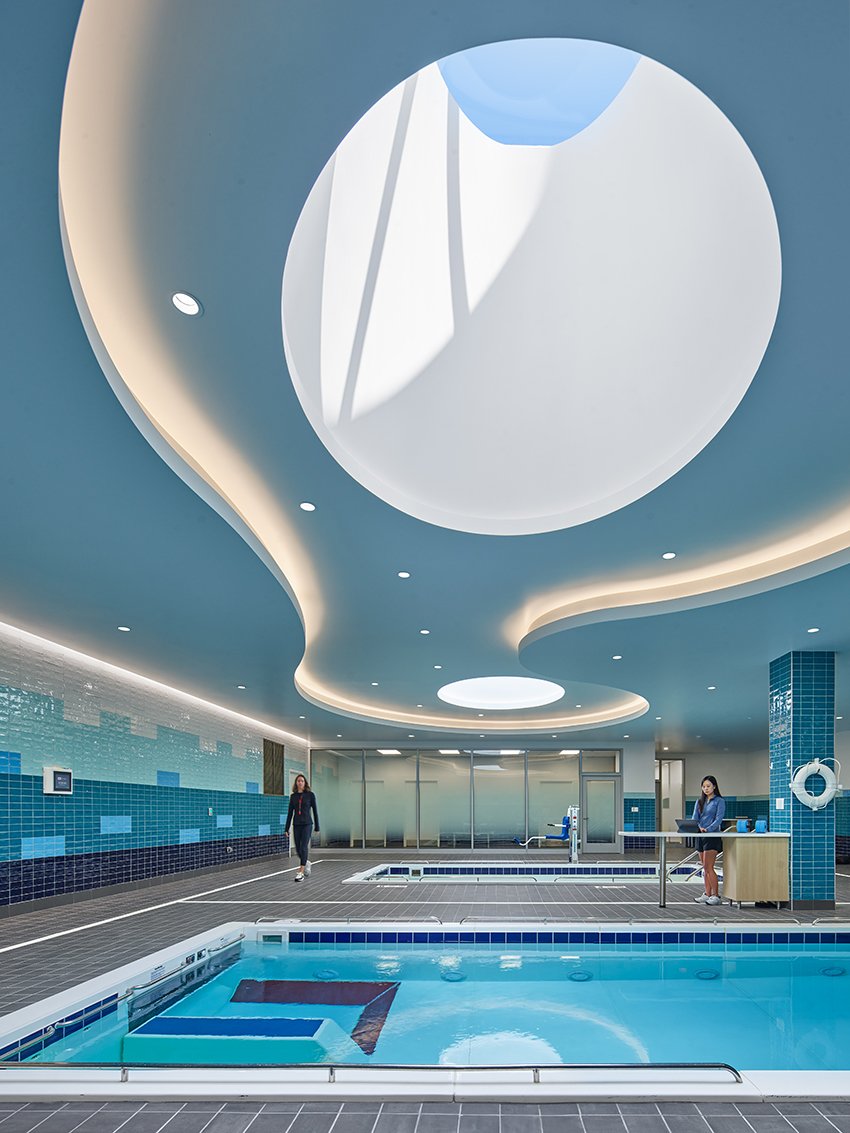
Photo Credit: ©Halkin Mason Photography
Life in Motion Meets Community Care:
The project embodies adaptive reuse at its finest, transforming a former retail space into a restorative healthcare environment. This regional initiative delivers on its promise of access, convenience, and dignity on a scale. As SLAM’s Senior Design Architect, Gabe Comstock, explains, “Preserving 210,000 square feet of the old Sears wasn’t nostalgia—it was letting the efficiency of the structure exhale, opening the volume to light, air, and the movement of healing.” Patients immediately respond to the natural daylight filtering through the preserved skylights, while thoughtfully designed recovery pathways—including a pool, therapy gym, and café courtyard—foster both motion and morale, enhancing the overall human experience.
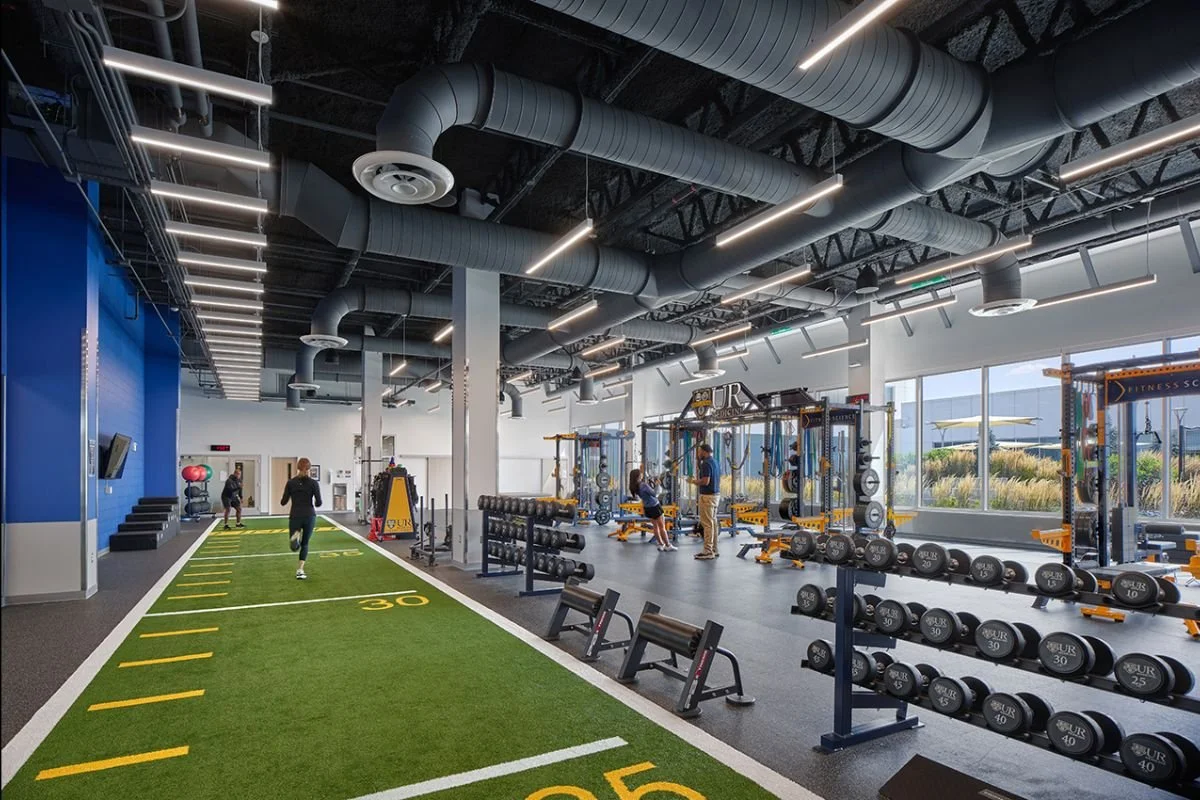
Photo Credit: ©Halkin Mason Photography
Human-Centered Design Principles:
The design champions equity across ages, abilities, and athletic levels, offering varied seating, inclusive routes, and easy-to-operate doors to ensure accessibility for all. Appealing to a wide spectrum of users—from student athletes enhancing elite performance to older adults regaining mobility, and everyone in between working to sustain lifelong wellbeing—the facility provides “one-stop shopping” for exceptional specialty care. All of it is delivered by leading academic clinicians and researchers in a sunlit, spacious environment.
Ease of access is fundamental—with wide circulation paths, low pile carpet, gentle floor transitions, non-slip surfaces, and large walk-off mats that accommodate users year-round, especially in a snowbelt region like Rochester. Destinations are intuitive, and wayfinding is clear; while corridors are long, their soft curving ceilings, episodic waiting areas, and sunlit views create an experience that feels engaging rather than difficult. Visible reception desks and helpful staff anchor each entry point, while waiting areas are thoughtfully furnished to support different needs and lengths of stay. Ergonomic, inclusive seating options—featuring tested armrests, higher seat heights, hip and bariatric chairs—foster comfort and dignity. Furniture groupings accommodate a range of activities, from lounging to focused work to social interaction. Durable colors and finishes align with material health standards, resulting in spaces that are uplifting, modern, and sophisticated.
The design reflects a deep understanding of how care teams operate within academic medicine—where teamwork, teaching, and cross-specialty collaboration are central to daily practice. Integrated throughout the care spaces are clinician work areas that support both focused, individual work and group collaboration, each designed with attention to acoustic performance and ergonomic comfort. The guiding principle is simple: provide what care teams need, exactly where they need it. Modular office furnishings and component systems, such as acoustic canopies and glazed partitions, are embedded within the clinic to create flexible, adaptable work environments. The onstage/offstage layout separates patient and staff circulation, with dedicated corridors linking workrooms directly to the backs of exam rooms to enhance efficiency and privacy. For patients, generously scaled sliding doors ensure ease of access for those using mobility aids such as walkers, wheelchairs, canes, and crutches. At the heart of the plan, a 220-foot care spine organizes 135,000 square feet of adaptive reuse, bringing clarity and coherence to a complex clinical environment.
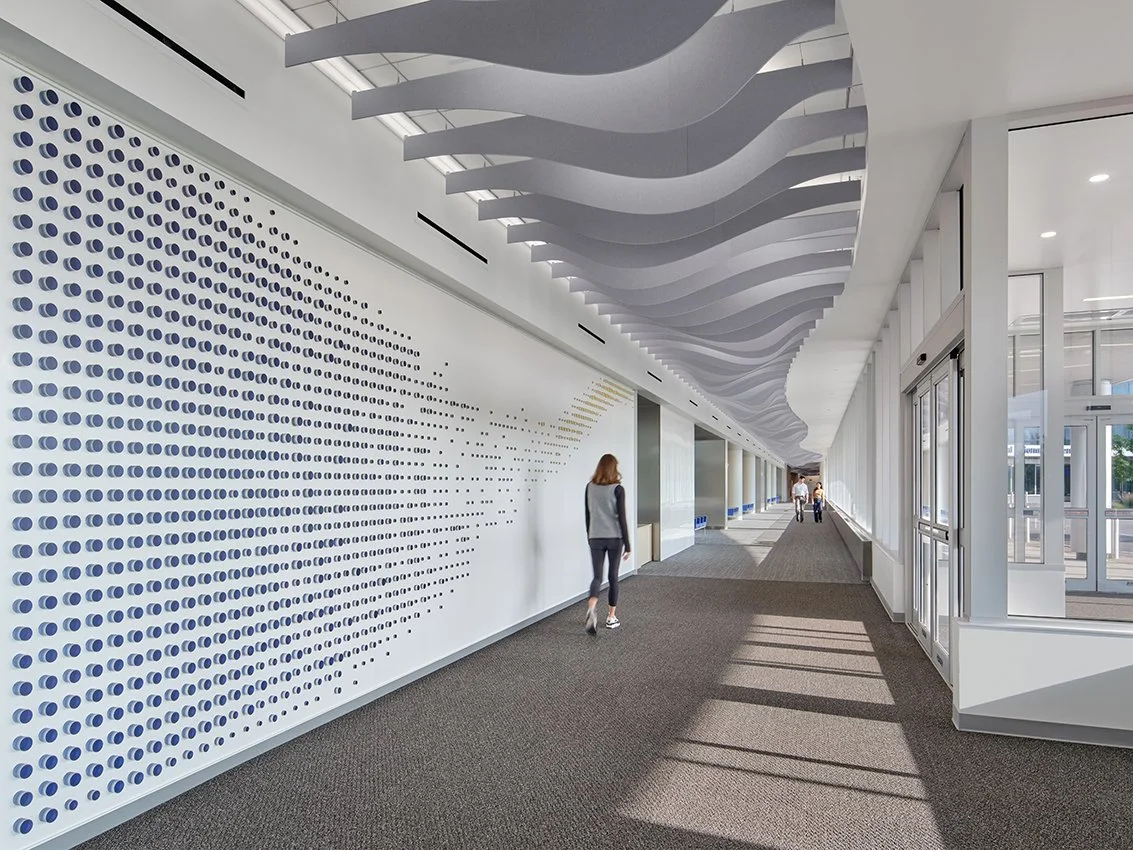
Photo Credit: ©Halkin Mason Photography
Movement as a Design Language:
Movement is celebrated throughout the design as a hopeful and encouraging expression, shaping both form and experience. Rhythmic ceiling patterns and lighting, along with varied floor textures, subtly cue pace, stance, and direction, supporting the body’s natural rhythm in motion. The design balances visibility and privacy—physical therapy and performance areas remain visually connected yet discreet, while recovery benches positioned along corridors invite moments of rest and reflection.
Behind the scenes, an intricate operational choreography ensures efficiency where corridors are cart-friendly, with distinct circulation paths separating staff and equipment flow from public routes. In a thoughtful trade-off, 18 inches of corridor width were allocated to create a dedicated service lane, allowing carts to move quietly behind acoustic doors. The result is a public spine that remains calm, glare-controlled, and uninterrupted—an environment that promotes movement, dignity, and recovery.
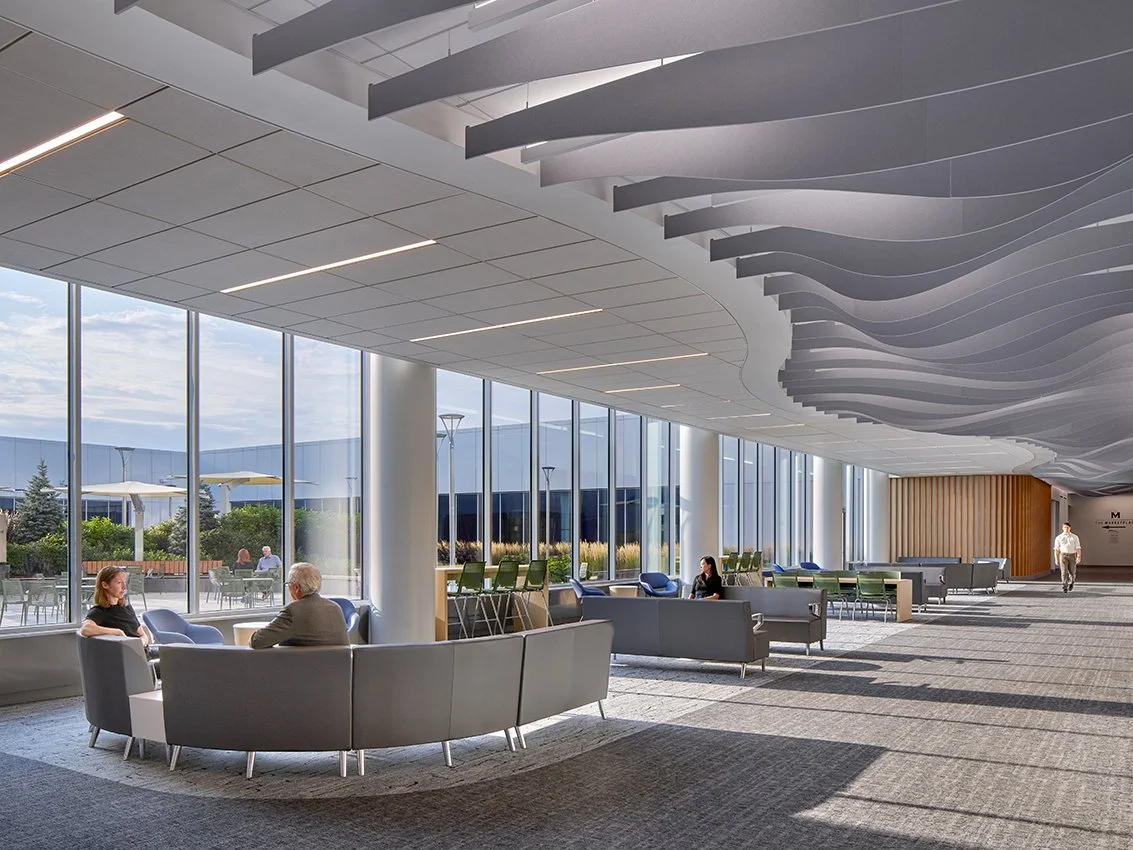
Photo Credit: ©Halkin Mason Photography
Biophilia, Daylight, and Micro-Recovery:
Courtyards and skylights bring natural light deep into the building. By reusing existing skylights above the nurse’s station in the prep and recovery area, the Center provides both staff and nearby patients with daylight and a sense of connection to nature and time of day. New skylights, above the rehab pool, are carefully designed to spread daylight throughout space, even from a small opening, which contributes to wayfinding and patient recovery. In the hand therapy gym, the existing mall skylight and tall ceilings fill the area with light. Courtyards and the front of the building use layers of transparent material, such as screens and glass, to let light reach farther inside. In the clinic tower, the reception and waiting areas curve around the building with panoramic windows that frame views of the surroundings. Even deep within the clinic’s corridors, daylight can be seen from both the front and back of the building.
A warm, hospitality-informed palette helps reduce stress and supports wayfinding and orientation within the space. The color scheme reflects the URMC brand identity by using classic accent colors, creating a crisp balance between warm and cool tones, neutrals, and rich hues. The design team selected a 50-year palette of architectural neutrals to ensure longevity, recognizing that healthcare facilities are built for decades of use (unlike commercial spaces with shorter lease cycles). To maintain flexibility and accommodate future style updates, the team chose classic neutrals for permanent materials, while reserving accent colors for easily changeable elements such as furniture, paint, and fabrics.
Continuous two-foot-on, two-foot-off linear lighting runs along the main spine of the space, establishing a consistent visual rhythm. The tunable white lighting system, ranging from 2700K to 5000K, supports natural circadian patterns by providing warmer tones in the morning and cooler tones later in the day. A reflectance ratio of 70/50/20 across ceilings, walls, and floors ensures gentle contrast, creating a comfortable and visually accessible environment for users with low vision.
The central courtyard serves as the heart of the biophilic healing concept, offering a restorative connection to nature through its design and material palette. Soft neutrals, gentle blues, and warm hues create a timeless aesthetic intended to endure for 50 years, ensuring the space feels perpetually current, grounded, and uplifting. This thoughtful balance of color and atmosphere reinforces the courtyard’s role as both a visual anchor and a source of calm within the larger environment.
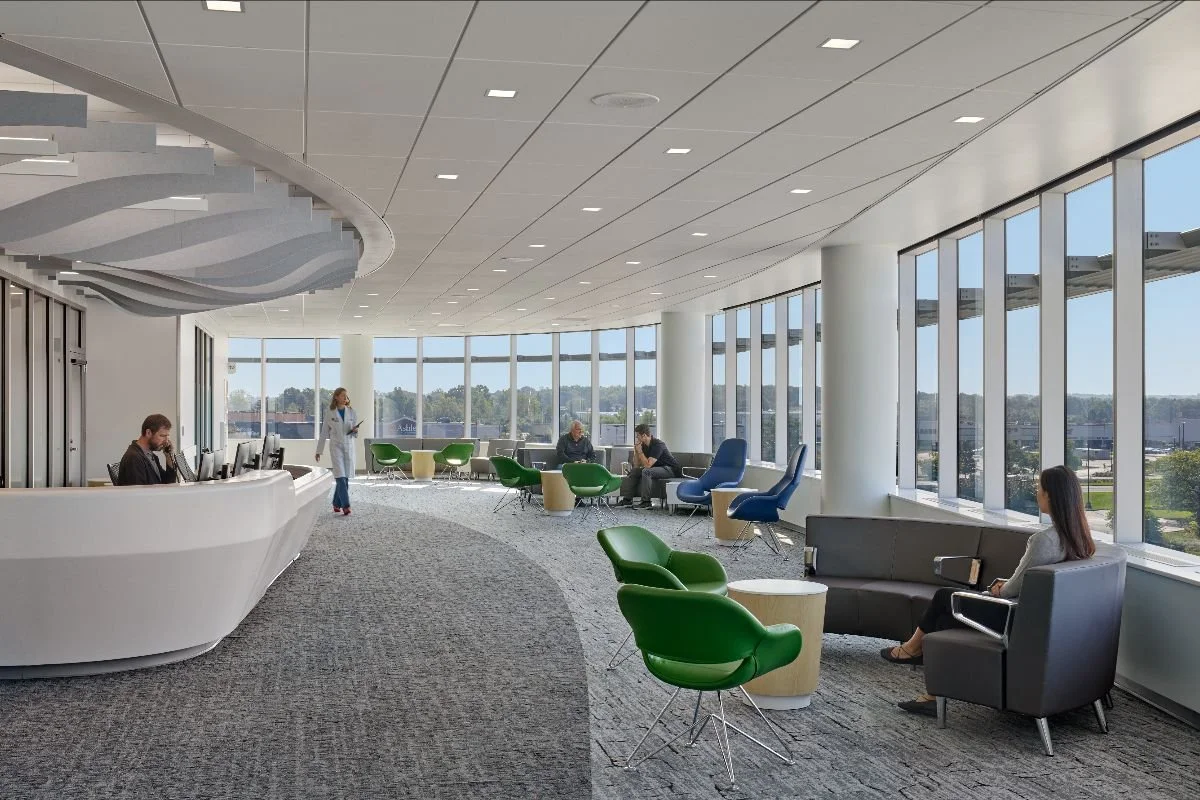
Photo Credit: ©Halkin Mason Photography
Materiality, Cleanability, and Acoustic Health:
The design prioritizes health, safety, and sensory well-being through thoughtful material and finish selections. Low-VOC, durable, and easily cleanable finishes support both infection control and occupant health, while slip-resistant, low-threshold flooring enhances accessibility. Targeted acoustic treatments minimize stress, protect privacy, and improve staff communication by reducing cognitive load. Semi-matte quartz thresholds, natural linoleum and rubber flooring (avoiding traditional vinyl), and sheet materials with heat-welded seams in wet rooms all meet material health standards and ensure long-term performance. At frequent touchpoints, maple veneer with a hospital-grade finish provides warmth without sacrificing cleanability. Together, these non-porous, resilient materials prevent bacterial accumulation, absorb sound, and create an environment that balances clinical rigor with sensory calm.
A Balance Between Privacy and Openness:
The design features daylit public zones with well-protected exam and imaging areas, ensuring a balance between openness and privacy. Natural light also extends into the clinic’s corridors and back-of-house staff areas, creating a comfortable and uplifting environment throughout. The layout establishes a clear spatial gradient, transitioning smoothly from public spaces to semi-private and clinical zones.
Wayfinding and Graphic Storytelling:
The interior design uses color and graphics organized around a “motion” language to express the brand identity and establish a strong emotional connection with users. Intuitive sightlines, gentle curves, and memorable landmarks guide movement and reduce decision time, making navigation feel natural. Ceiling features and art incorporating subtle motion serve as purposeful distractions, helping patients shift their focus from anxiety to curiosity while reinforcing orientation cues. Distinct color zones in waiting areas further support intuitive wayfinding, enabling staff to guide patients more efficiently and easing stress for both patients and caregivers. As one therapist noted after mock-walks with post-operative patients, “That bench by the glazing became my checkpoint—two breaths, then ten more steps”—a small but powerful example of how design can anchor comfort and progress.
Climate and Arrival Logic (Western New York):
The building’s arrival sequence in Western New York is designed with climate and comfort in mind. From curb to door, the entry experience prioritizes protection from snow and ice with vestibules, practical storage for winter layers, and surfaces that manage meltwater effectively. Hardware, thresholds, and resting spots are thoughtfully detailed to support visitors with limited mobility, ensuring accessibility in all conditions. Anticipating Rochester’s lake-effect winters and the low sun angles of December, the design layers vestibules, mats, and carefully positioned glazing to minimize glare, reduce heat loss, and prevent snow and water from tracking into the main entry.
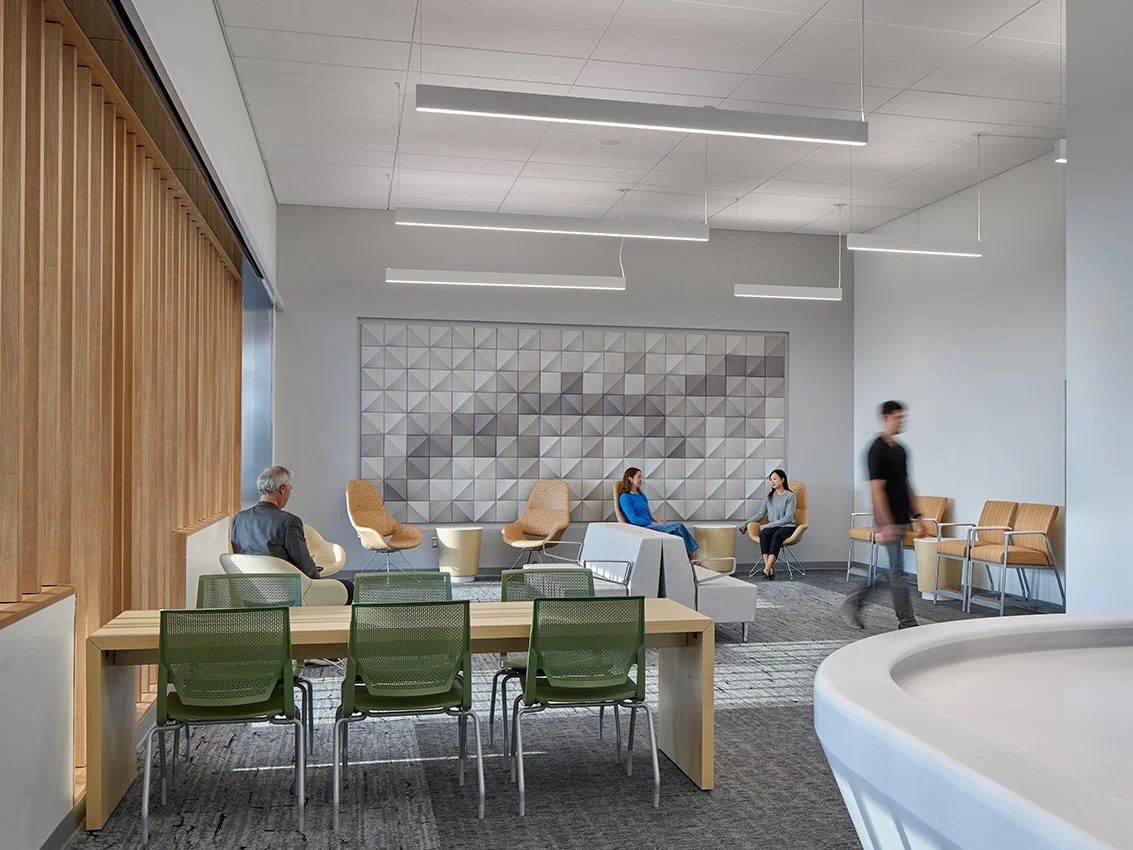
Photo Credit: ©Halkin Mason Photography
Amenities that Sustain Healing:
Conveniences that continue the healing process are woven throughout the design, creating spaces that nurture both body and mind. Therapy pools serve as shared resources for community connection, performance enhancement, and recovery. Complementing these are the café, courtyard, and a series of micro-lounges, which serve as welcoming, supportive places that encourage rest, social interaction, and moments of quiet restoration.
Timelessness and Stewardship:
The design embodies timelessness and stewardship through materials and systems chosen for their durability, adaptability, and long-term serviceability. Every element reflects an economy of maintenance and a commitment to longevity, with careful attention to patient and staff safety, material health, lifecycle performance, and enduring beauty. The building is also prepared for the future, incorporating next-generation solar readiness to support sustainable energy use over time.
Notable Outcomes and Highlights:
The URMC project achieved several notable outcomes, including lower anxiety levels and smoother navigation for visitors and patients. By bringing the entire continuum of care together in one highly accessible community location, the initiative streamlined services and improved overall accessibility. The staff also spent less time on wayfinding interventions, allowing for greater attention on direct care. Together, these improvements contributed to a stronger recovery experience and greater community adoption.



Designer Monologues the Podcast from IIDA New England with your host Brett Berry is officially LIVE!! On this show, we’ll share the stories behind the design of repurposing, developing and reshaping our communities. Incubated from the minds and skills of New England’s talented design community, you’ll hear how visual inspiration can come from nature, our history, current trends and more as we take you on a story-telling journey behind design.
Check out the latest episode here!


Company Name: Furngully
Company Establishment Date: December 2020
Company Description: Furngully transforms workspaces with curated furniture solutions that balance design, functionality, and sustainability — helping businesses, schools, and healthcare organizations thrive.
Company Mission Statement: "To create inspiring, responsible workspaces that support people, performance, and the planet — building lasting partnerships through service, integrity, and innovative design."
Company Products / Services: Furngully offers comprehensive workspace solutions, including:
Interior Design & Space Planning: Personalized discovery sessions and optimized space plans for functionality and inspiration. https://www.furngully.com/services/interior-design-and-space-planning/
Contract Furniture Specification & Procurement: Curated furniture packages balancing style and budget, with streamlined order management. https://www.furngully.com/products/
Project Management & Installation: Dedicated on-site project managers ensuring flawless execution and professional setup. https://www.furngully.com/services/project-management-and-installation/
Post-Installation Support: Warranty assistance, maintenance guidance, and future reconfiguration planning. https://www.furngully.com/services/post-installation-support/
Used Furniture Marketplace: A selection of pre-owned furniture options. https://www.furngully.com/products/used-furniture-marketplace/
Reseat Inventory Management: Tools for managing and tracking furniture assets. https://www.furngully.com/resources/reseat-inventory-management/
Financing Options: Flexible financing solutions to meet various budgetary needs. https://www.furngully.com/services/financing/
Moving/Decommission Services: Assistance with office moves and decommissioning projects. https://www.furngully.com/services/financing/
New England Contacts: Kevin Burke, Founder | Principal, kevin@furngully.com, 508-328-7939
Mike Isbister, VP/Sales, mike@furngully.com, 617-697-1888
What is the best part of being an IIDA NE Chapter Sponsor? The best part of being an IIDA NE Chapter Sponsor is the opportunity to connect with the region’s most creative and passionate design professionals, contributing meaningfully to the future of workplace design through collaboration, innovation, and community support.